
Table of Contents
Quick Characteristics (Line-by-Line)
-
Type: Advanced multi-method traction system
-
Methods: Vacuum, rod extender, compression hanging, ADS
-
Purpose: Progressive length development and tissue expansion
-
System: Modular and scalable training approach
-
Usage time: 2–8+ hours daily depending on level
-
Packages: Individual kits and full system bundle
-
Price range: $60 to $199+ depending on setup
-
Core advantage: Combines intensity and duration methods
-
Strategy: Expansion phase + retention phase
-
Learning curve: Moderate but manageable
-
Timeline: 3–6+ months for visible progress
-
Best choice: Full system for maximum results
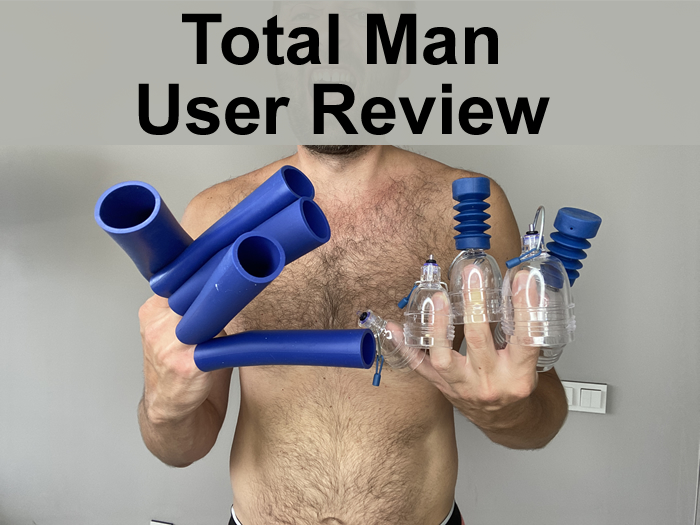
What Makes Total Man Different from Other Extenders
After testing nearly every type of extender on the market — rod systems, vacuum devices, hybrid extenders — one thing became very clear.
Most devices are limited by design.
They focus on one method:
-
rod extenders rely on constant tension
-
vacuum devices focus on comfort and long wear
-
hangers focus on intensity
Each works, but each has a limitation.
Total Man is the first system I used that actually combines all of these into one structured approach.
Instead of choosing between comfort and intensity, you use both — at the right time.
That is what makes it fundamentally different.
If you want to explore the system yourself:
https://geni.us/totalman
Expert Perspective on Multi-Method Traction
From a physiological standpoint, tissue adaptation depends on two variables:
-
Mechanical stress
-
Duration of exposure
Most extenders apply only one of these effectively.
Rod systems:
-
good for controlled stress
-
limited in wear time
Vacuum systems:
-
excellent for long duration
-
limited in intensity
Compression hanging:
-
very high stress
-
short sessions only
The most effective approach is combining all three.
This is exactly what Total Man is built around.
From an expert perspective, this makes sense because tissue growth is not linear. It requires variation in load and recovery cycles.
A system that allows you to alternate between intensity and duration has a higher long-term potential.
My Personal Decision – Why I Chose Total Man Over Others
I had access to:
-
traditional rod extenders
-
vacuum-based systems
-
hybrid devices
At first, I used them separately.
The problem was always the same:
-
progress would start
-
then plateau
-
then I would switch devices
That cycle repeated multiple times.
The turning point was when I stopped switching devices and started combining methods.
Total Man allowed me to do that within one system.
Instead of choosing between devices, I built a routine.
That is why I ultimately stayed with this system.
Understanding the Full System Approach
Total Man is not meant to be used randomly.
It is built around structured progression.
Core idea: Different tools for different stages
-
low tension + long duration → adaptation and retention
-
medium tension → controlled growth
-
high tension → stimulation and expansion
Each device fits into one of these roles.
This is what makes the system scalable.
Complete Package Breakdown
All Day Stretcher and Vacuum System
This is the foundation.
It allows:
-
long sessions
-
minimal discomfort
-
consistent daily use
From my experience, this is the most underrated tool.
Most people focus on intensity, but duration is what builds the base.
Rod Extender
This is the most controlled method.
It allows you to:
-
gradually increase tension
-
track progression
-
maintain structure
It is less comfortable than vacuum systems but more precise.
Compression Hanger
This is the most powerful tool in the system.
It creates:
-
high levels of tension
-
short but effective sessions
However, it requires experience.
Used incorrectly, it can slow progress. Used correctly, it accelerates it.
Recovery and Support Tools
These include:
-
vibration devices
-
sleeves and padding
-
support accessories
From my experience, these tools are essential for maintaining consistency.
Without recovery, intensity becomes counterproductive.
Ultimate Package
After testing individual kits, I can say this clearly.
Buying separate components makes sense only if you already know what you are doing.
For most users, the full system is the better choice.
It gives you:
-
flexibility
-
all methods from the start
-
ability to build a complete routine
You can check the full setup here:
https://geni.us/totalman
Build Quality and System Design
The design philosophy is practical.
-
durable materials
-
modular components
-
replaceable parts
It is not designed to look premium. It is designed to function daily.
After months of use, this becomes more important than aesthetics.
First Impressions as an Experienced User
Coming from other extenders, my first reaction was different.
It did not feel like a product.
It felt like a toolkit.
At first, that is confusing.
But once you understand how each part fits into the system, it becomes clear why it is structured this way.
Key Advantage Over Traditional Extenders
The biggest difference is simple.
Traditional extenders:
-
one method
-
fixed routine
Total Man:
-
multiple methods
-
adaptable routine
That flexibility is what allows long-term progress.
Who This System Is Really For
Best suited for:
-
users who already tried other devices
-
those willing to follow a structured routine
-
people focused on long-term results
Less suitable for:
-
beginners looking for simplicity only
-
users expecting fast results
-
those not ready for daily commitment
Reality Check
This system does not produce instant results.
Progress comes from:
-
consistency
-
proper structure
-
gradual increase in load
The first visible changes usually appear after several months, not weeks.
My Recommendation After Testing Everything
After using different types of extenders, I came to one conclusion.
No single device is enough.
A system is required.
That is why I chose to stay with Total Man.
If you want to build a complete routine instead of switching between devices, this is the most logical option:
My 7-Month Routine, How I Combined Devices and What Actually Worked
How My Approach Changed After Testing Multiple Extenders
Before using Total Man as a system, I was doing what most users do — testing devices one by one.
I would use:
-
a rod extender for a few weeks
-
then switch to a vacuum system
-
then try hanging
Each method worked to a certain point. But every time, progress slowed down.
The issue was not the devices. The issue was the lack of structure.
What changed with Total Man is that I stopped thinking in terms of products and started thinking in terms of phases.
Instead of asking “which device works best”, the question became:
What type of tension should I apply today?
That shift is what made the biggest difference.
My 7-Month Routine – Step by Step
I structured everything into three clear stages. Each stage had a specific goal.
Stage 1 – Foundation and Adaptation (Month 1–2)
This stage is underestimated, but it determines everything that comes after.
What I focused on:
-
consistency
-
comfort
-
duration
Devices I used:
-
all day stretcher (main tool)
-
occasional rod extender
Daily structure:
-
2 to 4 hours total
-
low tension
-
no aggressive methods
The goal here was simple — get used to tension.
The first 10 days were not productive in terms of results. They were productive in terms of adaptation.
What I noticed:
-
tissue becomes more responsive
-
discomfort decreases
-
longer sessions become possible
Mistake I almost made:
Increasing tension too early.
This would have slowed everything down later.
Stage 2 – Controlled Growth (Month 3–4)
This is where real progress begins.
At this stage, I started combining methods instead of relying on one.
Devices used:
-
rod extender
-
all day stretcher
-
light vacuum sessions
Daily structure:
Morning:
-
rod extender for 1 to 2 hours
Daytime:
-
all day stretcher for 3 to 5 hours
Evening:
-
optional light tension work
This combination is important.
Rod extender gives controlled tension.
All day stretcher maintains duration.
What changed during this phase:
-
tension became easier to handle
-
sessions felt more natural
-
I could increase load without discomfort
Key insight:
Progress comes from combining duration and tension, not choosing one over the other.
Stage 3 – Expansion and Optimization (Month 5–7)
This is where the system shows its full potential.
At this point, I introduced high-intensity methods.
Devices used:
-
compression hanger
-
rod extender
-
all day stretcher
My routine:
Compression hanger:
-
20 to 30 minutes
-
high tension
Rod extender:
-
1 to 2 hours
-
controlled progression
All day stretcher:
-
3 to 6 hours
-
low tension retention
This structure covers all phases of growth.
Why Combining Methods Works Better
Each device targets a different mechanism.
Compression hanger:
-
creates strong mechanical stress
Rod extender:
-
provides steady and measurable tension
All day stretcher:
-
keeps tissue extended over time
When combined, they create a full cycle:
-
stress
-
adaptation
-
retention
This is why progress becomes more consistent.
Load Management – The Most Important Factor
One of the biggest improvements I made was introducing cycles.
Instead of increasing tension every day, I used a simple structure:
-
3 to 4 days of increasing load
-
1 day of reduced intensity or rest
This prevented fatigue and improved consistency.
Without recovery, progress slows down.
With proper load management, progress becomes more stable.
Biggest Mistakes I Made
Trying to rush results
Increasing intensity too early reduced effectiveness.
Ignoring duration
Short high-intensity sessions alone are not enough.
Overcomplicating the routine
Too many changes reduce consistency.
Not tracking progression
Without tracking, it is easy to lose structure.
What Actually Produced Results
After 7 months, the conclusion is clear.
Results did not come from one method.
They came from:
-
combining different types of tension
-
staying consistent
-
gradually increasing load
The system works when used as a system.
How I Would Start Again
If I had to start from zero, I would:
-
Focus more on adaptation
-
Introduce intensity more gradually
-
Keep the routine simple in the beginning
This would have made the process more efficient.
Expert Insight on Routine Structure
From a training perspective, this system works similarly to progressive overload in fitness.
You do not increase weight every day.
You:
-
build capacity
-
increase load gradually
-
allow recovery
The same principle applies here.
That is why structured routines outperform random usage.
What Makes Total Man Different in Practice
After testing multiple extenders, the main difference is not the devices themselves.
It is the ability to combine them within one system.
Instead of switching products, you adjust your routine.
That is a much more effective approach.
My Personal Conclusion from This Phase
The system started making sense only after I stopped treating it like a single device.
Once I structured my routine properly, results became more consistent.
This is where Total Man becomes more than just another extender.
Best Packages, Full Roadmap, FAQ and Final Verdict
Which Total Man Package Is Actually Worth It
After testing different combinations and using the system for several months, one thing became clear.
Choosing the right package is not about price. It is about where you are in the process.
If You Are Starting from Zero
The best entry point is the All Day Stretcher and Vacuum Kit.
Why this makes sense:
-
it allows long daily sessions
-
it builds adaptation safely
-
it is the easiest to integrate into your routine
At this stage, you do not need intensity. You need consistency.
Trying to start with advanced tools usually leads to poor results.
If You Already Used Extenders Before
You are not a beginner anymore.
In this case, the best combination is:
-
rod extender
-
all day stretcher
This allows you to:
-
control tension
-
increase duration
-
build a structured routine
This is the stage where progress becomes more noticeable.
If You Want Maximum Results
At this level, you need the full system.
The most effective setup includes:
-
compression hanger
-
rod extender
-
all day stretcher
-
optional recovery tools
This is where Total Man becomes different from any single extender.
You are no longer using one method. You are running a system.
Why the Ultimate Package Makes the Most Sense
After testing individual kits, I came to a simple conclusion.
Buying parts separately only makes sense if you already know exactly what you need.
For most users, the Ultimate Package is the better option.
It gives you:
-
all core devices
-
flexibility to build your routine
-
ability to progress without buying additional parts
If you are serious about building a complete system, this is the most logical starting point:
Full Roadmap – From Beginner to Advanced
Here is the exact structure I would follow if starting again.
Phase 1 – Adaptation (Weeks 1–4)
-
2 to 4 hours daily
-
low tension
-
focus on comfort
Goal:
Allow tissue to adapt to constant stretching.
Phase 2 – Structure (Weeks 5–8)
-
introduce rod extender
-
increase total time to 4–6 hours
-
maintain long-duration stretching
Goal:
Combine duration with controlled tension.
Phase 3 – Growth (Month 3–5)
-
introduce light hanging
-
increase intensity gradually
-
maintain consistency
Goal:
Stimulate expansion while maintaining retention.
Phase 4 – Optimization (Month 5+)
-
use full system
-
cycle intensity
-
track progression
Goal:
Maximize results and avoid plateaus.
How to Build a Daily Routine
A structured routine looks like this:
Morning:
-
rod extender (1 to 2 hours)
Day:
-
all day stretcher (3 to 5 hours)
Evening:
-
compression hanger (20 to 30 minutes)
Rest:
-
1 day per week or reduced load days
This is not about doing everything every day. It is about balance.
Frequently Asked Questions
How many hours per day are needed
The effective range is 4 to 8 hours depending on your level.
Beginners should start lower and build gradually.
How long before results appear
-
adaptation: first 1 to 2 months
-
visible progress: around 3 to 5 months
-
stronger results: after 6 months
Consistency matters more than duration.
Is one device enough
Yes, but results will be slower.
The system works best when multiple methods are combined.
Is hanging required
Not in the beginning.
It becomes useful at advanced stages for increasing intensity.
Do you need rest days
Yes.
Recovery is part of the process. Without it, progress slows down.
What parts need replacement
Over time, you may need to replace:
-
silicone sleeves
-
vacuum seals
-
straps
This is normal for any system used regularly.
Quality and Long-Term Use
After months of use, the system proves to be practical.
-
durable materials
-
replaceable parts
-
modular structure
It is designed for long-term use rather than short-term results.
Expert Opinion – Why This System Works
From a structural perspective, this system aligns with how tissue adapts to mechanical stress.
Growth requires:
-
variation in load
-
consistency over time
-
proper recovery
Systems that provide only one type of tension limit progress.
A system that combines multiple methods allows better long-term adaptation.
This is why Total Man performs better when used correctly.
My Final Verdict After Testing Everything
After using different extenders and switching between systems, the conclusion is clear.
The limitation was never the devices themselves.
The limitation was the approach.
Once I moved to a structured system instead of isolated tools, results became more consistent.
Total Man is not the simplest option.
But it is one of the most complete.
Who This System Is Best For
Best for:
-
users who want a full system
-
those willing to follow a structured routine
-
people focused on long-term results
Not ideal for:
-
users looking for quick fixes
-
those who prefer simple one-device solutions
-
people not ready for daily consistency
Final Recommendation
If you treat this as a single device, you will get average results.
If you treat it as a system, it becomes much more effective.
That is the key difference.
If you want to build a complete routine and avoid switching between devices, this is the most logical choice:
